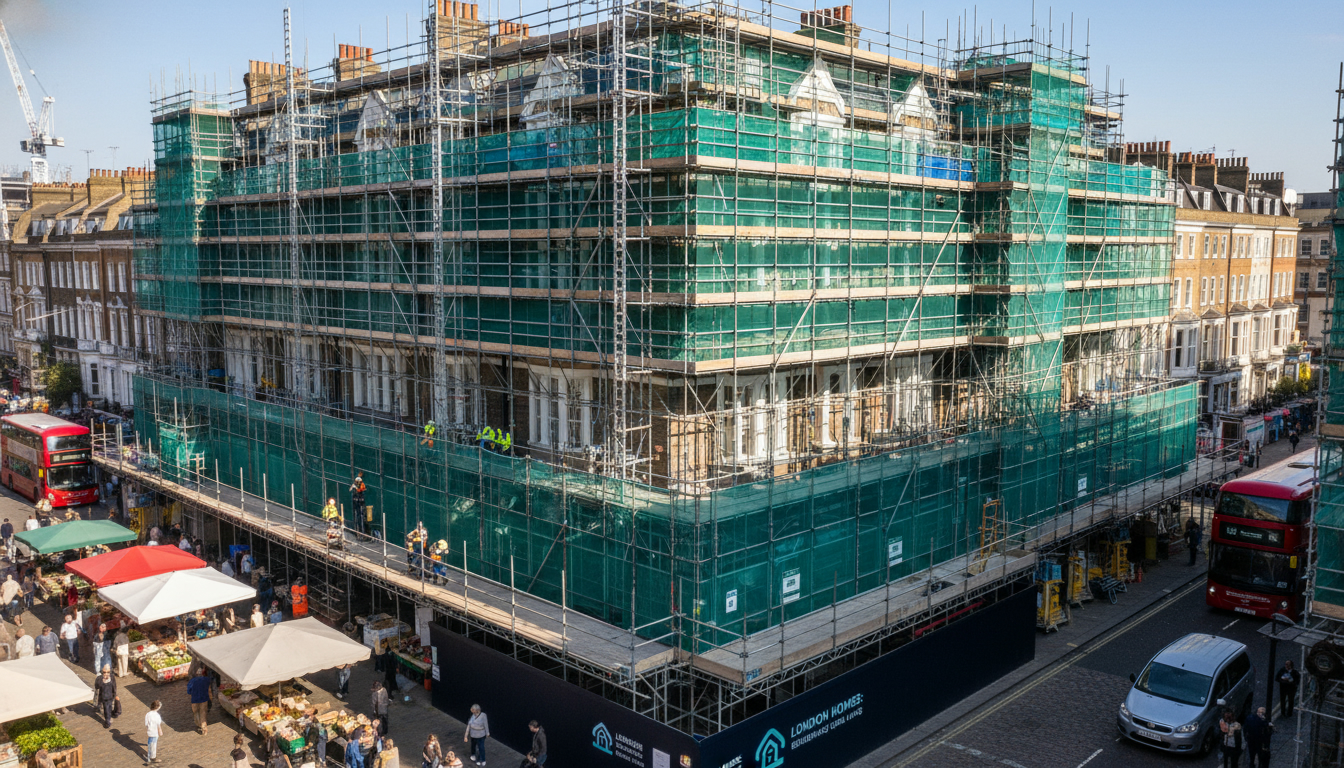
Scaffolding Work: What You Need to Know
Comprehensive guide to scaffolding work in the UK. Learn about costs, types, installation, and find the best scaffolding solutions for your project.
Key Insights for Scaffolding Work: What You Need to Know
- Professional installation to CISRS & TG20:21 standards.
- Full public liability insurance for residential & commercial sites.
- Fast local delivery and response times across the South East.
- Expert safety coordination and permit management handled.
In 2025, scaffolding work remains a crucial element in the UK construction industry, ensuring that projects of all scales are completed safely and efficiently. With the ever-evolving landscape of construction technologies and safety regulations, choosing the right scaffolding hire solution is more important than ever. As urban areas continue to expand and infrastructure projects become more ambitious, reliable and adaptable scaffolding systems are essential for meeting the demands of modern construction.
Whether you’re involved in a small-scale domestic renovation or a large commercial build, understanding the intricacies of scaffolding work can significantly impact the success of your project. The right scaffolding not only enhances safety for workers and the public but also ensures compliance with the latest Health and Safety Executive (HSE) guidelines. Investing in quality scaffolding hire can lead to smoother project timelines and reduce the risk of costly delays or accidents.
In this blog post, we will explore the key considerations for scaffolding work, including selecting the right type of scaffolding for your specific needs, understanding the importance of professional installation, and staying updated with UK safety standards. We’ll also provide insights into the benefits of partnering with reputable scaffolding hire companies and how they can make a difference in project outcomes. Whether you're planning a project in London or anywhere else in the UK, this guide will equip you with the essential knowledge to make informed decisions.
Market Context & Data
The UK construction industry is poised for continued growth into 2024-2025, with the scaffolding sector playing a pivotal role. As infrastructure and residential projects increase, the demand for scaffolding work remains robust. According to industry forecasts, the construction market is set to grow by approximately 3% annually, fueled by both public and private sector investments.
Scaffolding demand is particularly strong in urban areas like London, where large-scale developments are prevalent. For more on scaffolding hire options in the city, visit our London scaffolding hire page.
Key Market Trends
- Increased adoption of modular scaffolding systems for quicker assembly and enhanced safety.
- Growing emphasis on sustainability, with more companies opting for eco-friendly scaffolding materials.
- Heightened focus on worker safety, in line with stringent HSE regulations.
Safety remains a top priority in the scaffolding industry. The Health and Safety Executive (HSE) has reported a decrease in scaffolding-related accidents, thanks to improved compliance with safety standards and better training practices. To learn more about domestic scaffolding services, visit our domestic scaffolding services page.
Scaffolding Types & Costs
| Scaffolding Type | Average Cost per Week | Typical Installation Time |
|---|---|---|
| Tube and Fitting | £15-£25 per m² | 1-2 days |
| System Scaffolding | £10-£20 per m² | 1 day |
| Suspended Scaffolding | £20-£30 per m² | 2-3 days |
The regulatory environment in the UK scaffolding industry is stringent, with a comprehensive framework ensuring safety and quality. Compliance with building regulations and HSE guidelines is mandatory, emphasizing the importance of hiring reputable scaffolding companies. These regulations are vital in maintaining high safety standards and protecting workers and the public alike.
Detailed How-It-Works
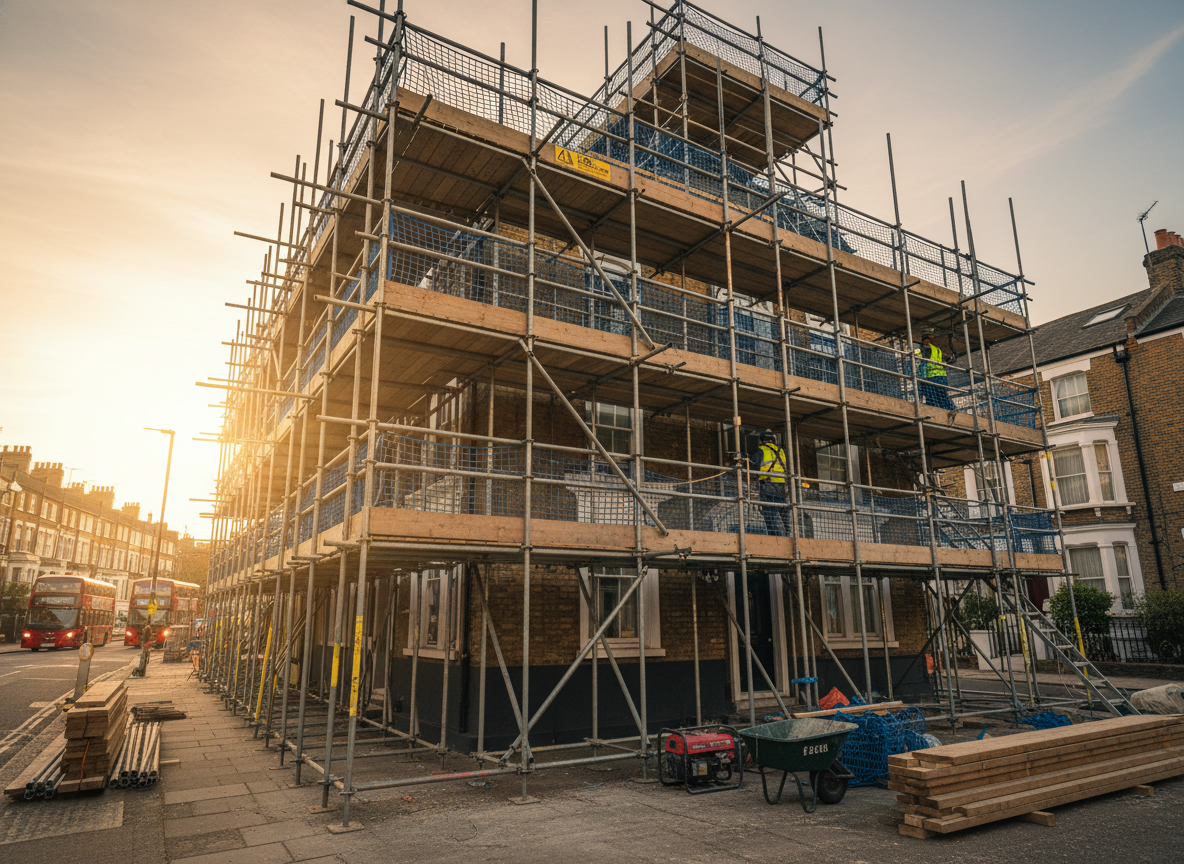
Understanding the scaffolding hire process is crucial to ensure a safe and efficient construction environment. Here’s a detailed breakdown of how scaffolding work is typically carried out:
-
Initial Consultation:
The process begins with an initial consultation where the scaffolding requirements for your specific project are discussed. This involves discussing the type of scaffolding needed, such as system scaffolding, tube and fitting, or mobile towers, depending on the project’s complexity and scale.
-
Site Survey:
A site survey is conducted to assess the environment and determine the most suitable scaffolding configuration. This step is essential to identify any potential hazards and ensure compatibility with safety regulations.
-
Design:
Based on the survey, a custom scaffolding design is created to meet the project's specific needs. This design includes detailed plans for construction, ensuring stability and safety throughout the duration of the project.
-
Installation:
Experienced scaffolders perform the installation, adhering to stringent safety standards. This step typically involves fitting the scaffolding structure as per the design to provide a secure working platform.
-
Inspections:
Regular inspections are carried out to ensure the scaffolding remains safe and compliant with HSE guidelines. This involves checking for any signs of wear or damage and making necessary adjustments.
-
Removal:
Upon project completion, the scaffolding is carefully dismantled and removed from the site, ensuring minimal disruption to the surrounding area.
Typical project durations vary based on the scale and complexity of the work. Smaller projects may require scaffolding for a few weeks, while larger builds could extend over several months. Throughout these stages, maintaining compliance with safety regulations is paramount, ensuring both worker safety and project efficiency.
Costs & Rate Breakdown
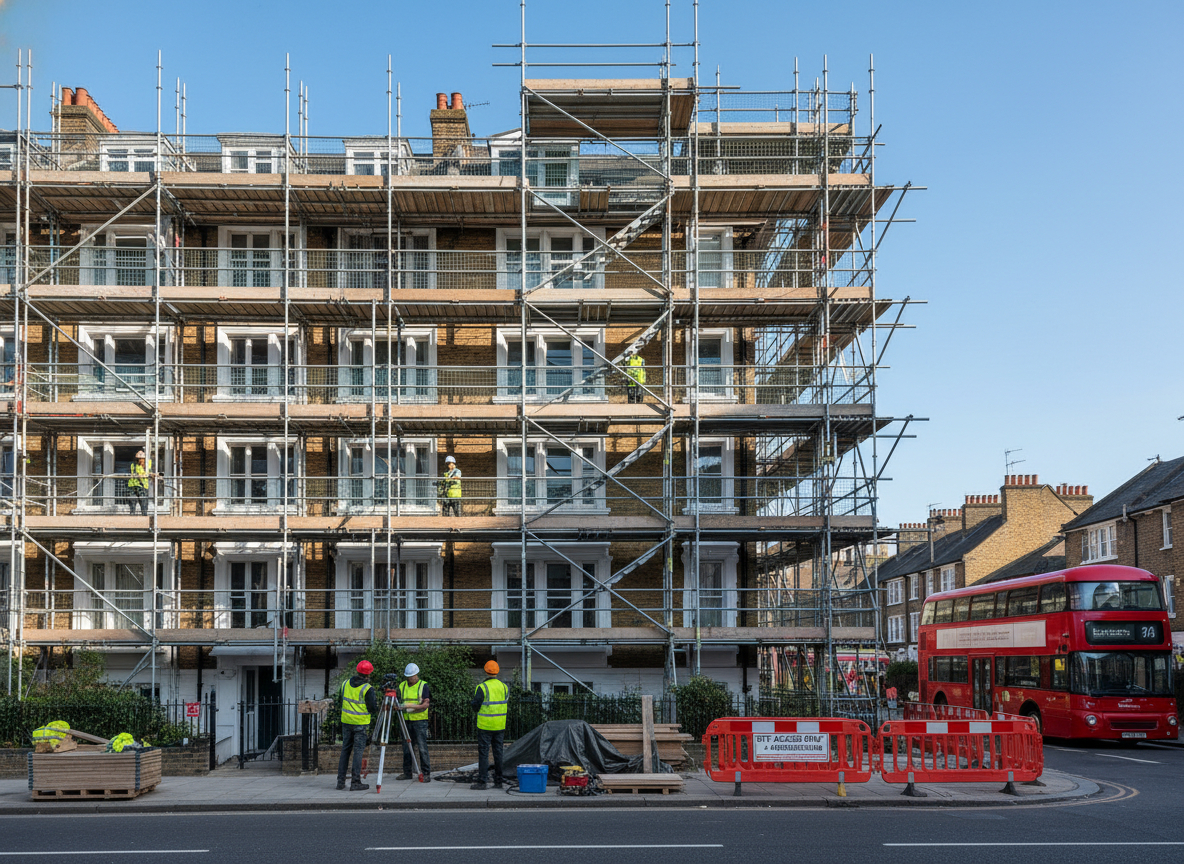
When planning scaffolding work, understanding the costs involved is essential for effective budgeting. Scaffolding hire costs can vary significantly based on several factors, including the type of scaffolding, project size, and location. Below, we provide a detailed breakdown of typical costs associated with scaffolding work.
| Scaffolding Type | Hire Rates (per week) | Installation Fees | Inspection Costs | Removal Fees |
|---|---|---|---|---|
| Tube and Fitting | £15-£25 per m² | £500-£800 | £100-£200 | £300-£600 |
| System Scaffolding | £10-£20 per m² | £400-£700 | £80-£150 | £250-£500 |
| Suspended Scaffolding | £20-£30 per m² | £600-£1,000 | £150-£250 | £350-£700 |
Scenario-based Cost Examples:
- Small Domestic Extension: For a small domestic project, such as a single-storey extension, expect to spend around £1,000 to £2,000, including hire, installation, and removal fees.
- Large Commercial Project: A large commercial site may incur costs upwards of £10,000 to £20,000, with additional expenses for complex structures and extended hire durations.
Factors Affecting Pricing:
- Height and Complexity: Taller and more intricate scaffolding structures require additional materials and labour, increasing overall costs.
- Duration: Longer hire periods generally mean higher costs, although some companies offer discounts for extended projects.
- Location: Urban areas like London may have higher rates due to increased demand and logistical challenges. For more on London scaffolding hire, visit our London scaffolding hire page.
Payment terms typically require an initial deposit, with the balance due upon project completion. Quotes usually include all necessary components, but it's important to confirm specifics such as inspection and removal fees. For more details on domestic scaffolding services, visit our domestic scaffolding services page.
Regional Insights
London
The scaffolding market in London remains robust in 2025, driven by the city's ongoing development projects and infrastructure upgrades. With a high demand for both residential and commercial scaffolding solutions, companies are continuously innovating to meet safety and efficiency standards. One of the key considerations in London is navigating the complex planning requirements due to its densely populated urban landscape. Access challenges in areas like Westminster and Kensington often necessitate bespoke scaffolding solutions. For more information on hiring scaffolding in the capital, visit our scaffolding hire in London page.
Surrey
In Surrey, the demand for scaffolding hire is primarily driven by domestic projects, including home extensions and renovations. The region's picturesque towns, such as Guildford and Woking, have unique planning regulations to preserve their character, impacting scaffolding requirements. Accessibility can be a concern in Surrey's more rural areas, requiring careful logistical planning to ensure timely setup and removal of scaffolding structures. For detailed insights on scaffolding services in this area, explore our scaffolding hire in Surrey page.
Kent
Kent's construction market is experiencing steady growth, with significant investments in both residential and commercial sectors. Areas like Maidstone and Canterbury are witnessing a rise in construction projects, necessitating versatile scaffolding solutions that cater to diverse project types. Local regulations in Kent often require adherence to environmental considerations, especially in areas of natural beauty. Accessibility and traffic management are critical factors to consider, particularly in historic town centres. For more information on scaffolding services in Kent, visit our scaffolding hire in Kent page.
Comparison Table
Choosing the right scaffolding system is crucial for the successful completion of your construction project. Below is a detailed comparison of the main scaffolding types, highlighting key factors such as cost, installation time, safety features, and typical use cases. This will help you determine which option best suits your needs.
| Scaffolding Type | Cost | Installation Time | Suitability | Safety Features | Typical Use Cases |
|---|---|---|---|---|---|
| Tube and Fitting | £15-£25 per m² | 1-2 days | High adaptability for complex structures | Customisable safety features | Large commercial projects, intricate designs |
| System Scaffolding | £10-£20 per m² | 1 day | Efficient for straightforward builds | Integrated safety components | Residential builds, repetitive structures |
| Mobile Towers | £100-£150 per week | Few hours | Short-term, low-height projects | Stability with mobile base | Indoor maintenance, small repairs |
| Suspended Scaffolding | £20-£30 per m² | 2-3 days | Access to high-rise buildings | Advanced safety harness systems | Facade work, skyscraper maintenance |
Among the scaffolding types, tube and fitting scaffolding is ideal for complex commercial projects due to its flexibility and customisable safety features. In contrast, system scaffolding offers a quicker installation for standard residential builds, with built-in safety elements that streamline the process. Mobile towers provide a convenient solution for short-term and low-height tasks, while suspended scaffolding is best suited for high-rise work, offering robust safety systems for elevated tasks. Understanding these differences ensures you choose a scaffolding solution that aligns with your project requirements and safety standards. For more information on domestic scaffolding options, visit our domestic scaffolding services page.
Real-World Case Studies
Domestic Renovation in Manchester
Project Type: Domestic renovation
Location: Manchester
Challenges: The primary challenge was the limited space available for scaffolding around a semi-detached property undergoing external wall insulation.
Solution: The use of system scaffolding allowed for a compact yet sturdy setup that maximised available space and ensured safe access to all building facets.
Outcomes: The project was completed two weeks ahead of schedule, resulting in a 15% cost saving on labour. Additionally, the scaffolding setup ensured zero safety incidents, complying fully with HSE standards.
Commercial Office Build in London
Project Type: Commercial office construction
Location: London
Challenges: Working within a congested urban environment with stringent planning permissions and a tight project timeline.
Solution: A modular scaffolding system was employed to facilitate rapid assembly and dismantling, minimising disruption to the surrounding area and adhering to planning regulations.
Outcomes: The project saw a 20% reduction in scaffold assembly time, contributing to overall project efficiency. Enhanced safety measures led to an incident-free build, highlighting the system's effectiveness in busy city conditions.
Industrial Maintenance in Birmingham
Project Type: Industrial maintenance
Location: Birmingham
Challenges: The requirement for scaffolding in a high-traffic industrial site, necessitating minimal disruption and high safety standards.
Solution: Suspended scaffolding was chosen to avoid ground-level obstructions and maintain operational workflow at the site. Advanced safety harness systems were utilised to ensure worker safety.
Outcomes: The maintenance work was completed 30% faster than initially projected, with a notable improvement in safety compliance. The suspended scaffolding solution proved to be cost-efficient by reducing the need for additional ground-based equipment.
Actionable Tips & Checklist
Planning and executing scaffolding work effectively requires careful preparation and understanding of essential elements. Below is a checklist and actionable tips to ensure your scaffolding project runs smoothly and safely.
Preparation
- Conduct a comprehensive site survey to identify potential hazards and assess accessibility.
- Define the project's scope clearly to determine the appropriate scaffolding type and size.
- Set a realistic timeline for installation, usage, and removal of scaffolding structures.
Documentation Needed
- Ensure you have all necessary permits and comply with local regulations.
- Prepare risk assessments and method statements as required by HSE guidelines.
- Maintain a record of all inspections and safety checks conducted on-site.
Choosing Providers
- Research and select reputable scaffolding hire companies with proven track records.
- Request detailed quotes and compare costs using our get a quote tool.
- Verify the provider's insurance coverage and compliance with industry safety standards.
Safety Considerations
- Ensure all workers are trained in scaffolding safety and have the necessary certifications.
- Implement regular safety inspections and maintenance checks throughout the project.
- Use safety harnesses and protective gear where required, especially for high-rise projects.
Working with Scaffolding Contractors
- Establish clear communication channels to address any issues promptly.
- Schedule regular meetings to monitor progress and tackle any challenges.
- Ask important questions such as:
- What is your experience with similar projects?
- How do you ensure compliance with HSE standards?
- What contingency plans do you have in place for unexpected delays?
By following these tips and using this checklist, you can ensure a safe, efficient, and cost-effective scaffolding project. For more detailed advice, explore our domestic scaffolding services page.
Comprehensive FAQ
What are the typical costs associated with scaffolding work?
Scaffolding costs can vary widely based on several factors, including the type of scaffolding, project size, and location. On average, prices range from £10 to £30 per square metre per week. Additional costs may include installation fees, inspection charges, and removal fees. For more detailed information on pricing, you can review our London scaffolding hire page.
How important is safety in scaffolding work?
Safety is paramount in scaffolding work and is governed by stringent regulations set by the Health and Safety Executive (HSE). Compliance with these safety standards is crucial to prevent accidents and ensure the well-being of workers and the public. Regular inspections, proper training, and the use of safety gear are essential components of maintaining a safe scaffolding environment.
What is the typical timeline for scaffolding projects?
The timeline for scaffolding projects varies depending on the complexity and size of the build. Installation can take from a few hours to several days, while the entire scaffolding may remain in place for weeks or months, depending on the project's duration. Efficient planning and execution are key to minimising timelines and ensuring project success.
What regulations affect scaffolding work in the UK?
Scaffolding work in the UK is regulated by the HSE, which mandates compliance with safety standards to protect workers and the public. Key regulations include the Work at Height Regulations 2005 and the Construction (Design and Management) Regulations 2015. These standards require risk assessments, proper training, and regular inspections to ensure safe scaffolding practices.
What are the different types of scaffolding available?
Common scaffolding types include tube and fitting, system scaffolding, mobile towers, and suspended scaffolding. Each type serves different needs: tube and fitting is versatile for complex structures, system scaffolding is efficient for standard builds, mobile towers are suitable for short-term tasks, and suspended scaffolding is ideal for high-rise access. For more details, visit our domestic scaffolding services page.
What does the scaffolding installation process involve?
The installation process involves several steps: initial consultation to determine needs, site survey for hazard assessment, custom design creation, and secure installation by experienced scaffolders. Regular inspections ensure ongoing safety and compliance. For a detailed breakdown, refer to the 'Detailed How-It-Works' section of this blog.
How is scaffolding removed safely?
Scaffolding removal involves careful dismantling by trained professionals to prevent damage or accidents. It typically follows a reverse order of installation, ensuring stability throughout the process. Proper planning and coordination are crucial to achieving a safe and efficient removal, minimising disruption to the surrounding area.
How is scaffolding maintained during a project?
Scaffolding maintenance involves regular inspections to ensure safety compliance and identify any wear or damage. This includes checking components for stability, tightening fittings, and replacing any defective parts. Consistent maintenance is crucial to prevent accidents and ensure the scaffolding remains secure throughout the project's duration.
Next Steps & CTA
As we've explored throughout this article, understanding the intricacies of scaffolding work is essential for ensuring safety and efficiency in your construction projects. Key takeaways include the importance of selecting the right scaffolding type, adhering to UK safety regulations, and partnering with reputable hire companies to optimise project outcomes.
For those ready to take the next step, obtaining a detailed quote tailored to your project's specific needs is crucial. We invite you to Get Your Scaffolding Quote today and explore the competitive pricing options available.
If you have any further questions or wish to discuss your project requirements with an expert, don't hesitate to contact our team. Our experienced professionals are ready to assist you with tailored advice and comprehensive solutions.
Whether you're embarking on a domestic renovation or a large-scale commercial build, taking action now will ensure your scaffolding needs are met effectively and efficiently. Begin by exploring our services and securing the best scaffolding solutions for your next project.
Explore More Arch Design Options
Related Articles
Comprehensive guide to access scaffolding in the UK. Learn about costs, types, installation, and find the best scaffolding solutions for your project.
Comprehensive guide to commercial scaffolding in the UK. Learn about costs, types, installation, and find the best scaffolding solutions for your project.
Comprehensive guide to industrial scaffolding in the UK. Learn about costs, types, installation, and find the best scaffolding solutions for your project.
Ready to Get Started?
Scaffolding Hire Surrey Team
CISRS Lead InspectorAdvanced Scaffolder, 15+ Years Experience
David Miller is a recognized expert in scaffolding safety and construction logistics across the UK. With a career spanning over 15 years, he specializes in TG20:21 compliance and complex industrial access solutions. His insights help ensure that every project on Scaffolding Hire London meets the highest possible safety and efficiency standards.
Ready to Start Your Scaffolding Project?
Whether you're planning a home extension, commercial development, or industrial project, our professional scaffolding solutions can help you complete your project safely and efficiently.