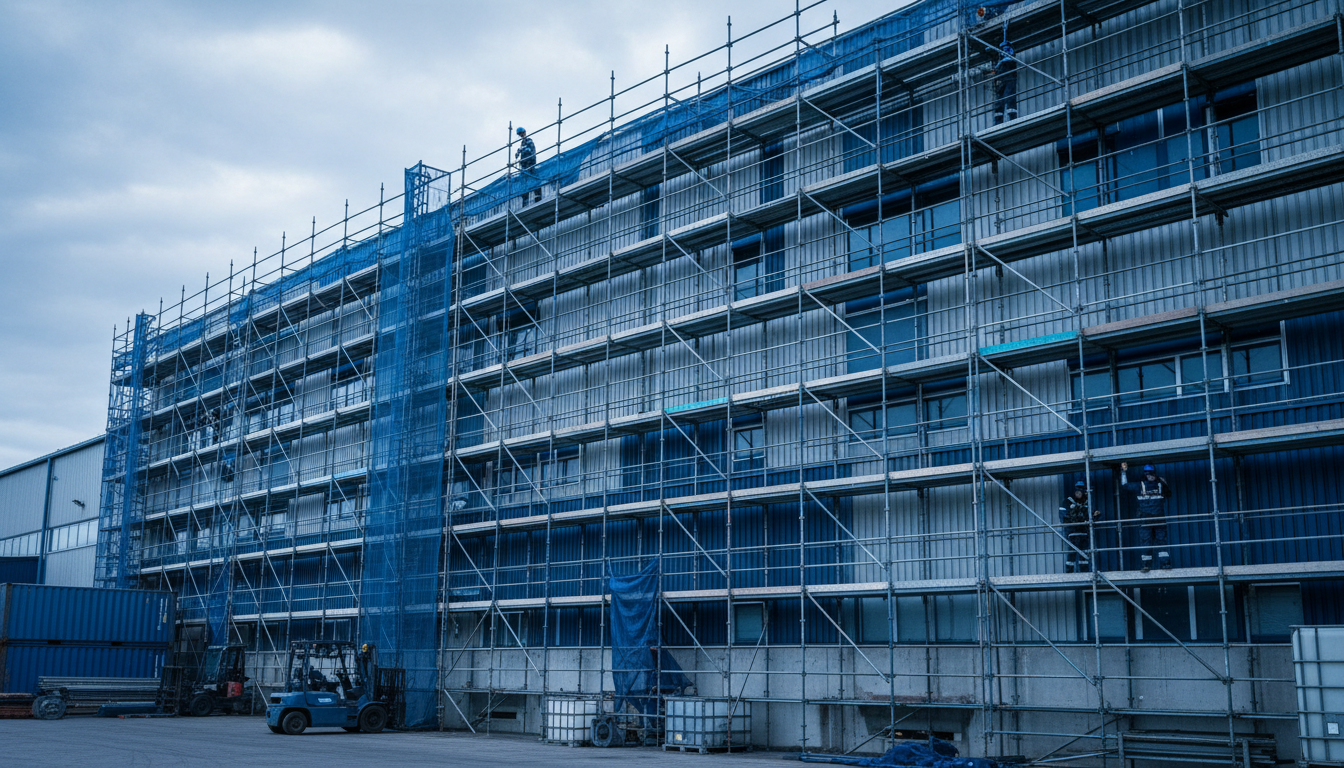
Your Complete Guide to Industrial Scaffolding
Comprehensive guide to industrial scaffolding in the UK. Learn about costs, types, installation, and find the best scaffolding solutions for your project.
Key Insights for Your Complete Guide to Industrial Scaffolding
- Professional installation to CISRS & TG20:21 standards.
- Full public liability insurance for residential & commercial sites.
- Fast local delivery and response times across the South East.
- Expert safety coordination and permit management handled.
Your Complete Guide to Industrial Scaffolding
Did you know that improper scaffolding remains a leading cause of construction site injuries in the UK? According to the Health and Safety Executive (HSE), scaffolding-related accidents account for a significant portion of workplace incidents, underscoring the critical importance of proper scaffolding practices. With the construction industry booming in 2025, understanding industrial scaffolding has never been more crucial.
Industrial scaffolding plays a vital role in ensuring safety and efficiency on construction sites across the UK. From towering skyscrapers to sprawling infrastructure projects, scaffolding provides the essential support that workers rely on to perform their jobs safely at height. This guide will illuminate the complexities of industrial scaffolding, offering insights into best practices and safety standards as outlined by key industry bodies like the National Access & Scaffolding Confederation (NASC).
As the landscape of construction evolves with technological advancements and stricter safety regulations, staying informed about industrial scaffolding is essential for anyone involved in construction. Whether you are a project manager, site supervisor, or a curious enthusiast, this guide will equip you with the knowledge to navigate the scaffolding world effectively.
In this comprehensive guide, you'll discover everything from the basics of scaffolding types and components to advanced safety protocols and innovative trends shaping the industry. We’ll delve into the specifics of scaffolding hire, explore the role of regulatory bodies, and highlight the importance of regular inspections and maintenance. Prepare to enhance your understanding and ensure your projects meet the highest safety standards.
Market Context & Data
In 2024, the UK scaffolding industry is projected to witness a remarkable growth, driven by an upswing in construction projects and a heightened focus on safety standards. According to recent industry reports, the market size is expected to reach £2.8 billion by 2025, reflecting a robust annual growth rate. This surge is primarily attributed to increased infrastructure investments and more stringent safety regulations.
Industry data shows that scaffolding demand is influenced by several key factors:
- Urbanisation and the rise of high-rise constructions
- Renovation and maintenance of existing structures
- Expansion of renewable energy projects requiring specialised scaffolding
Recent analysis indicates a strong emphasis on safety, particularly with guidelines such as HSE's TG20:21, which outlines technical guidance for tube and fitting scaffolding, and SG4:22, focusing on preventing falls from height.
| Scaffolding Type | Average Cost (£) | Installation Time (Days) |
|---|---|---|
| Tube and Fitting | 75 - 150 per m² | 2 - 5 |
| System Scaffolding | 50 - 100 per m² | 1 - 3 |
| Specialised Scaffolding | 100 - 200 per m² | 3 - 7 |
The regulatory environment in the UK is rigorous, ensuring that scaffolding practices meet the highest safety standards. The NASC plays a pivotal role in setting industry benchmarks, promoting safe and innovative scaffolding solutions. For instance, the adoption of lightweight, modular systems is gaining traction, offering quick assembly and enhanced safety features.
As the construction landscape continues to evolve, staying abreast of these trends and regulations is essential for industry professionals. By aligning with the latest standards and embracing new technologies, companies can not only enhance safety but also improve project efficiency and cost-effectiveness. For more detailed insights on scaffolding services tailored to specific needs, visit our domestic scaffolding page.
Step-by-Step Guide to Industrial Scaffolding
Understanding the intricacies of industrial scaffolding can be the difference between a safe, efficient project and a hazardous, delayed one. By breaking down the scaffolding process into digestible steps, you can ensure compliance with UK safety standards and enhance overall project management. Let's dive into the essential steps that guide the successful deployment of industrial scaffolding.
Step 1: Planning and Design
The journey begins with meticulous planning and design. This phase involves assessing the project's specific requirements, including height, load capacity, and site conditions. During this stage, collaboration with experienced scaffold designers ensures that the scaffold structure meets all necessary safety and operational standards.
Consideration must be given to the type of scaffolding required. For instance, system scaffolding is popular for its modular design, allowing for quick assembly and adaptability. In contrast, tube and fitting scaffolding offers unparalleled flexibility for complex structures. Understanding each type's benefits and limitations is crucial in this stage.
Step 2: Site Preparation
Before the first piece of scaffolding is erected, site preparation is paramount. This involves clearing the area of debris and ensuring the ground is level. Base plates are then strategically placed to distribute weight evenly and provide stability, preventing the scaffold from sinking or shifting.
Safety is a critical consideration here. Ensure all personnel are trained in recognising potential hazards and that safety protocols, such as the use of personal protective equipment (PPE), are strictly followed. The timeline for this phase varies depending on site conditions but typically ranges from one to two days.
Step 3: Erection of the Scaffold
With the site ready, the scaffolding erection process can commence. This involves assembling standards (vertical tubes), ledgers (horizontal tubes), and transoms (cross members) using couplers to form a rigid structure. Bracing is added to enhance stability, particularly in areas exposed to high winds or heavy loads.
The speed at which scaffolding is erected depends on the chosen type. System scaffolding, for instance, can be assembled more rapidly due to its interlocking components, often within one to three days. In contrast, tube and fitting scaffolding, though more customisable, may take longer.
Step 4: Inspection and Certification
Once erected, a thorough inspection is necessary to ensure compliance with safety regulations such as TG20:21. This includes checking the integrity of couplers, the placement of toe boards, and the condition of planks. Only after passing inspection should the scaffold be certified for use.
Employing a qualified scaffold inspector is recommended to guarantee all aspects meet the industry standards. Regular inspections should continue throughout the project to maintain safety and address any environmental changes or wear and tear.
Step 5: Dismantling and Site Clearance
Upon project completion, the scaffolding must be dismantled safely, reversing the erection process. It's crucial to follow a systematic approach to prevent accidents from falling components. The site should be left clear of debris, ensuring no residual hazards remain.
Efficient dismantling not only ensures safety but also contributes to overall project timelines, typically aligning with the project's completion schedule. Consider engaging professional services for this phase to streamline the process and avoid unnecessary delays.
By following these steps, you can confidently navigate the complexities of industrial scaffolding, ensuring both safety and efficiency. For further guidance on specific scaffolding solutions, explore our dedicated pages on domestic scaffolding and more.
Comprehensive FAQ
What are the different types of industrial scaffolding?
There are several types of industrial scaffolding, each suited to specific construction needs. Tube and fitting scaffolding offers high flexibility, ideal for complex structures. System scaffolding, known for its modular components, allows quick assembly and adaptability. Specialised scaffolding caters to unique requirements like curved structures or high-load capacities. Understanding each type helps in selecting the best option for your project. For more on scaffolding types, explore our scaffolding hire in London page.
How much does a scaffolding permit cost in London?
In London, the cost of a scaffolding permit varies based on location and duration. Typically, prices range from £100 to £300. The permit ensures compliance with local council regulations, covering street usage and safety. It's essential to apply well in advance, as processing can take up to four weeks. For more detailed information on permits, consider consulting with local authorities or visiting our London scaffolding hire page.
What are the key safety regulations for industrial scaffolding in the UK?
Key safety regulations for industrial scaffolding in the UK are outlined by the Health and Safety Executive (HSE) and the NASC. The TG20:21 provides technical guidance for tube and fitting scaffolding, while SG4:22 focuses on preventing falls. Regular inspections and adherence to these guidelines are crucial to maintaining a safe working environment. Compliance with these regulations is mandatory to avoid penalties and ensure worker safety.
How long does it take to install industrial scaffolding?
The installation time for industrial scaffolding varies depending on the type and complexity of the project. System scaffolding can be erected in 1 to 3 days due to its modular nature, while tube and fitting scaffolding may take 2 to 5 days. Specialised scaffolding, which often requires custom solutions, can take longer, typically between 3 to 7 days. Proper planning and site preparation can significantly influence these timelines.
What is involved in the scaffolding removal process?
The scaffolding removal process involves systematically dismantling the structure in reverse order of assembly. Safety is paramount, requiring trained personnel to manage the process and prevent accidents from falling components. Proper site clearance is essential, ensuring no debris or hazards remain. Engaging professional services for dismantling can streamline the process and ensure compliance with safety standards.
How do you maintain industrial scaffolding?
Maintaining industrial scaffolding involves regular inspections to check for wear and tear, especially in couplers, planks, and base plates. Any damaged components should be replaced immediately to prevent accidents. Periodic cleaning of the scaffold helps remove dirt and debris that might affect stability. Engaging a qualified inspector for routine checks ensures ongoing compliance with safety regulations.
What are the costs associated with hiring industrial scaffolding?
The cost of hiring industrial scaffolding depends on several factors, including type, duration, and project location. Tube and fitting scaffolding typically ranges from £75 to £150 per m², while system scaffolding costs between £50 and £100 per m². Specialised scaffolding can be more expensive, ranging from £100 to £200 per m². Additional costs may include permits and inspections, which should be factored into the budget.
What tips can help in hiring the right scaffolding service?
When hiring a scaffolding service, consider the company's experience, safety record, and compliance with industry standards. Ask for references and review past project portfolios. Ensure they offer comprehensive insurance coverage and clear communication on costs and timelines. For a reliable service, explore our recommendations on the domestic scaffolding page, which highlights reputable providers.
Are there any common misconceptions about industrial scaffolding?
One common misconception is that all scaffolding is the same, leading to inappropriate choices for specific projects. Another is underestimating the importance of regular inspections, which are crucial for safety. Some believe that scaffolding permits are unnecessary, risking legal issues. Understanding the nuances and requirements of scaffolding can prevent these errors and ensure a safer, more efficient project.
Next Steps & CTA
As we've explored in this guide, industrial scaffolding is a cornerstone of construction safety and efficiency. Proper planning and design, adherence to safety standards, and routine inspections are key to ensuring successful scaffolding projects. By understanding these elements, you've equipped yourself with the knowledge to minimise risks and optimise performance on site.
Now that you're informed about the intricacies of industrial scaffolding, it's time to put this knowledge into action. Whether you're preparing for a new project or need to reassess your current scaffolding setup, take the next step by securing a reliable scaffolding service. Get Your Scaffolding Quote today to ensure your project meets the highest standards of safety and efficiency.
If you have specific questions or need expert guidance, don't hesitate to contact our team. Our experienced professionals are ready to assist you with tailored solutions that fit your unique project requirements. With the right support, you can confidently navigate the complexities of industrial scaffolding and achieve outstanding results.
Remember, the success of your project relies heavily on the scaffolding choices you make. Take action now to ensure your site's safety and efficiency. Visit our domestic scaffolding page for more insights and options tailored to your needs.
Explore More Arch Design Options
Related Articles
Comprehensive guide to access scaffolding in the UK. Learn about costs, types, installation, and find the best scaffolding solutions for your project.
Comprehensive guide to commercial scaffolding in the UK. Learn about costs, types, installation, and find the best scaffolding solutions for your project.
Comprehensive guide to portable scaffold hire in the UK. Learn about costs, types, installation, and find the best scaffolding solutions for your project.
Ready to Get Started?
David Miller
CISRS Lead Safety InspectorAdvanced Scaffolder, 15+ Years Experience
David Miller is a recognized expert in scaffolding safety and construction logistics across the UK. With a career spanning over 15 years, he specializes in TG20:21 compliance and complex industrial access solutions. His insights help ensure that every project on Scaffolding Hire London meets the highest possible safety and efficiency standards.
Ready to Start Your Scaffolding Project?
Whether you're planning a home extension, commercial development, or industrial project, our professional scaffolding solutions can help you complete your project safely and efficiently.