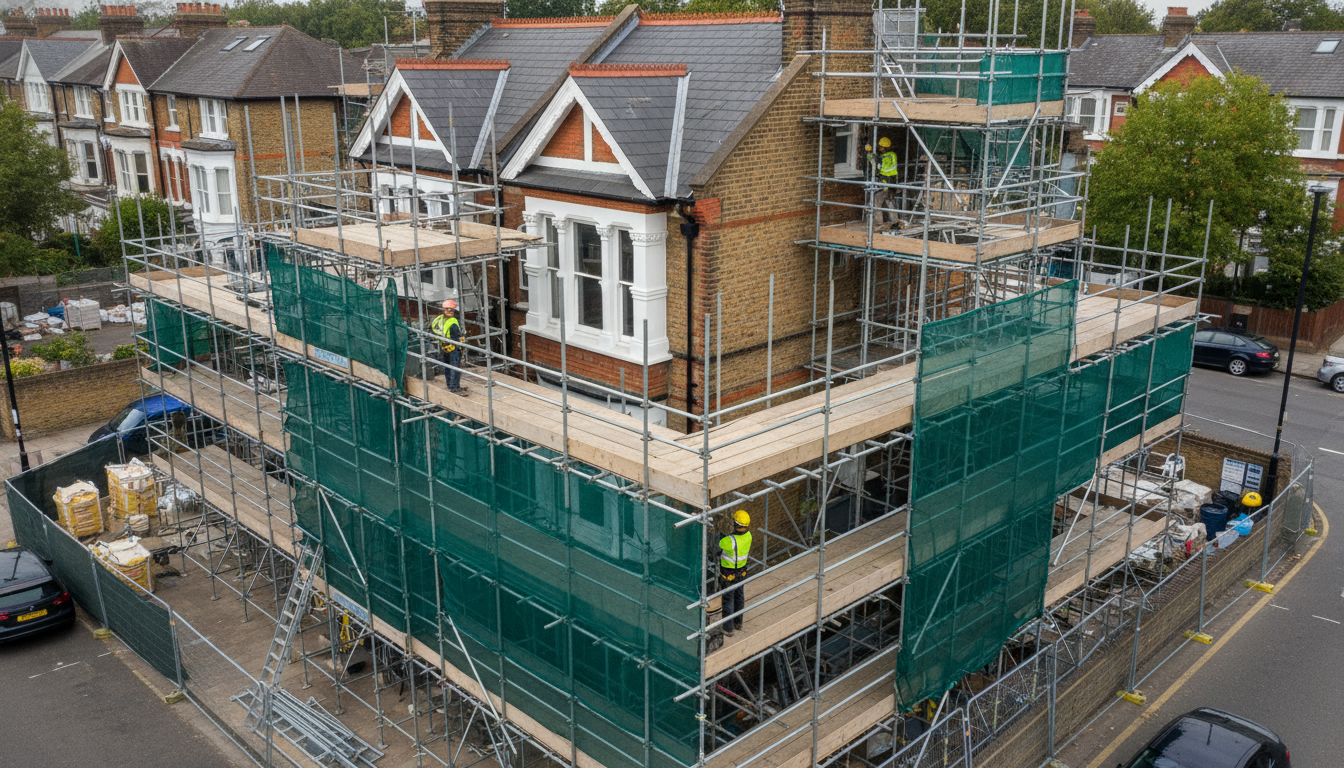
All About Scaffolding Types: Types & Options
Comprehensive guide to scaffolding types in the UK. Learn about costs, types, installation, and find the best scaffolding solutions for your project.
Key Insights for All About Scaffolding Types: Types & Options
- Professional installation to CISRS & TG20:21 standards.
- Full public liability insurance for residential & commercial sites.
- Fast local delivery and response times across the South East.
- Expert safety coordination and permit management handled.
Did you know that improper scaffolding remains a leading cause of construction site injuries in the UK? Despite advancements in construction technology, the importance of choosing the right scaffolding types cannot be overstated. With the construction industry projected to grow by 4.5% annually by 2025, understanding the nuances of scaffolding types is more critical than ever for ensuring safety and efficiency on site.
In today’s fast-paced construction environment, versatility and adaptability are key. Choosing the right scaffolding type not only enhances safety but also optimises workflow, saving both time and money. Whether you’re working on a domestic project or a large-scale commercial build, having the right scaffolding can make all the difference. As the UK market evolves, so do the options available, offering more tailored solutions than ever before.
This guide will delve into the various scaffolding types available in the UK, explaining their specific uses and benefits. From traditional tube and fitting scaffolding to more modern systems like cuplock and kwikstage, we’ll explore what each type brings to the table. You’ll also find insights into safety considerations and tips for selecting the right scaffolding for your project. By the end of this article, you'll have a comprehensive understanding of the scaffolding landscape, empowering you to make informed decisions on your next project.
Types & Options Overview
Understanding the different scaffolding types is crucial for any construction project, whether it's a small residential renovation or a large commercial development. The right scaffolding not only ensures the safety of your workforce but also enhances efficiency and flexibility. Here, we explore the primary scaffolding types available in the UK, each with its unique features and applications.
System Scaffolding: Efficient and Modular
System scaffolding is a pre-engineered, modular scaffolding system that is designed for quick assembly and disassembly. Popular types include cuplock, kwikstage, and ringlock, which are renowned for their versatility and ease of use.
- Key Features: Modular components, quick assembly, high load capacity.
- Best Used For: Projects requiring fast setup and teardown, repetitive or complex geometries.
- Considerations: Initial cost may be higher, but savings on labour can offset this.
System scaffolding is particularly effective in projects where time is a critical factor. For instance, the cuplock system is often employed in large-scale projects like bridges or stadiums due to its robust structure and adaptability.
Tube and Fitting Scaffolding: Flexible and Traditional
Tube and fitting scaffolding remains a staple in the UK construction industry due to its unparalleled flexibility. It involves connecting tubes and fittings to create a bespoke structure, ideal for complex building shapes.
- Key Features: Highly customisable, adaptable to any structure.
- Best Used For: Projects with irregular shapes or unique architectural features.
- Considerations: Can require more time to assemble compared to system scaffolds.
This type is often chosen for refurbishment projects where buildings have unique architectural elements that require a tailored approach.
Mobile Towers: Portable and Convenient
Mobile scaffolding towers are lightweight, portable structures on wheels, offering flexibility and mobility. These are particularly useful for tasks that require frequent repositioning.
- Key Features: Easy to move, lightweight, quick to assemble.
- Best Used For: Indoor projects or maintenance work where mobility is key.
- Considerations: Limited height, not suitable for heavy loads.
Commonly used by painters and decorators, mobile towers allow workers to reach different areas quickly without the need to dismantle and reassemble the scaffold.
Suspended Scaffolding: Versatile for Heights
Suspended scaffolding is hung from the roof or an overhead structure, making it ideal for work on high-rise buildings. This type allows for easy vertical movement, crucial for façade work.
- Key Features: Adjustable height, minimal ground space needed.
- Best Used For: High-rise building maintenance, window cleaning.
- Considerations: Requires specialised training to operate safely.
For example, suspended scaffolding is often employed in city skyscraper maintenance, where accessing each level from the ground is inefficient.
Each scaffolding type offers distinct advantages and is suited to particular scenarios. By understanding these options, you can select the scaffolding that best meets the specific needs of your project, ensuring safety and efficiency. If you're looking for expert advice or to hire scaffolding in London, explore our scaffolding hire services to find the perfect fit for your needs.
Comparison Table
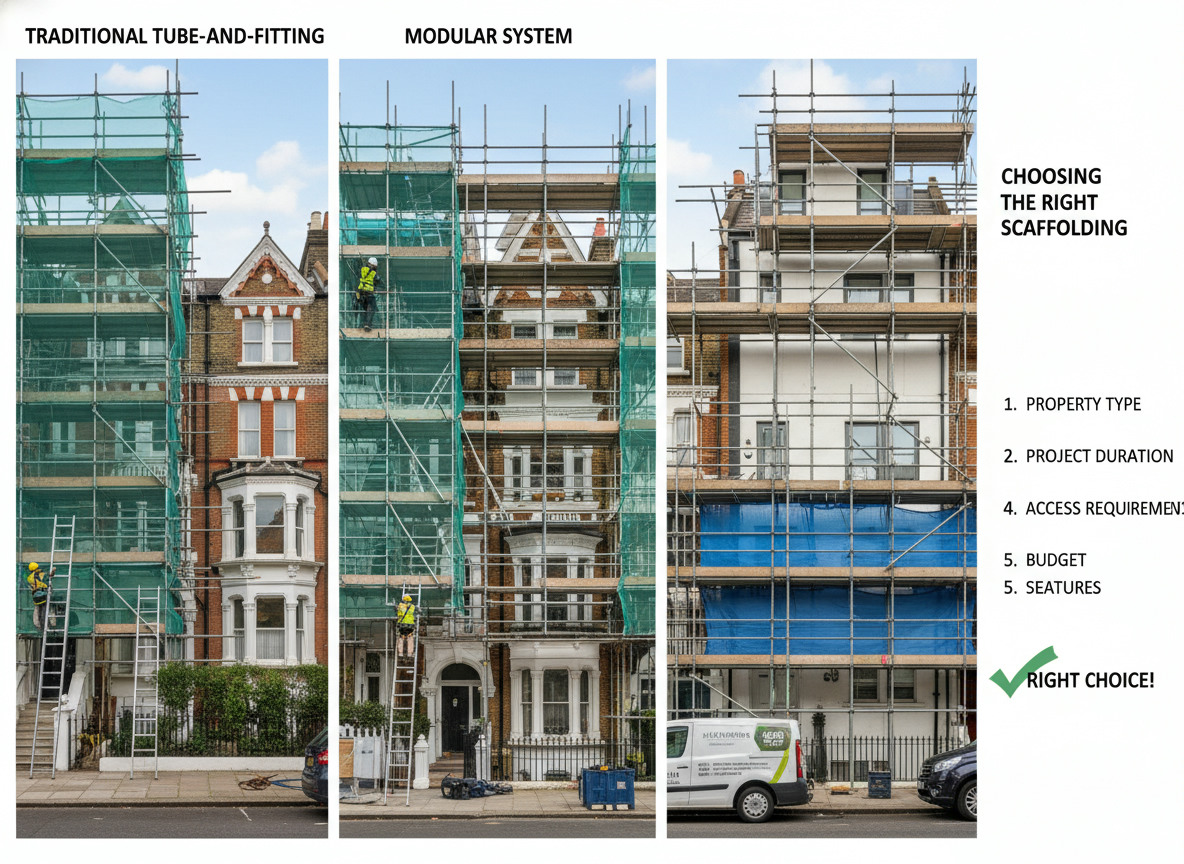
Choosing the right scaffolding type is essential for balancing cost, efficiency, and safety on your construction project. Below, we present a detailed comparison of the main scaffolding types, focusing on key factors such as cost, installation time, suitability, and safety features. This table will help you evaluate which scaffolding option aligns best with your project requirements.
| Scaffolding Type | Cost | Installation Time | Suitability | Safety Features | Typical Use Cases |
|---|---|---|---|---|---|
| System Scaffolding | Moderate to High | Fast | Versatile, repetitive structures | High load capacity, stability | Bridges, stadiums, large projects |
| Tube and Fitting Scaffolding | Variable | Slow | Irregular, complex structures | Highly customisable, robust | Refurbishments, unique architectural designs |
| Mobile Towers | Low | Very Fast | Frequent mobility needed | Lightweight, easy to manoeuvre | Indoor projects, maintenance |
| Suspended Scaffolding | High | Moderate | High-rise access | Adjustable height, minimal ground space | Skyscraper maintenance, façade work |
As you can see, each scaffolding type comes with its own set of advantages and potential drawbacks. For instance, while system scaffolding offers quick installation and a high load capacity, it may incur higher initial costs compared to mobile towers. On the other hand, tube and fitting scaffolding provides unmatched flexibility for bespoke projects, although it may take longer to set up. Understanding your project's specific needs will guide you in selecting the most suitable scaffolding option.
For projects that demand frequent repositioning, mobile towers are a cost-effective and efficient choice, especially for maintenance tasks. In contrast, suspended scaffolding is ideal for high-rise building work, providing easy vertical movement and requiring minimal ground space. If you need further assistance in determining the best scaffolding solution for your project, our domestic scaffolding services offer expert advice and quality equipment to ensure your construction site runs smoothly and safely.
Step-by-Step Guide to Choosing the Right Scaffolding Type
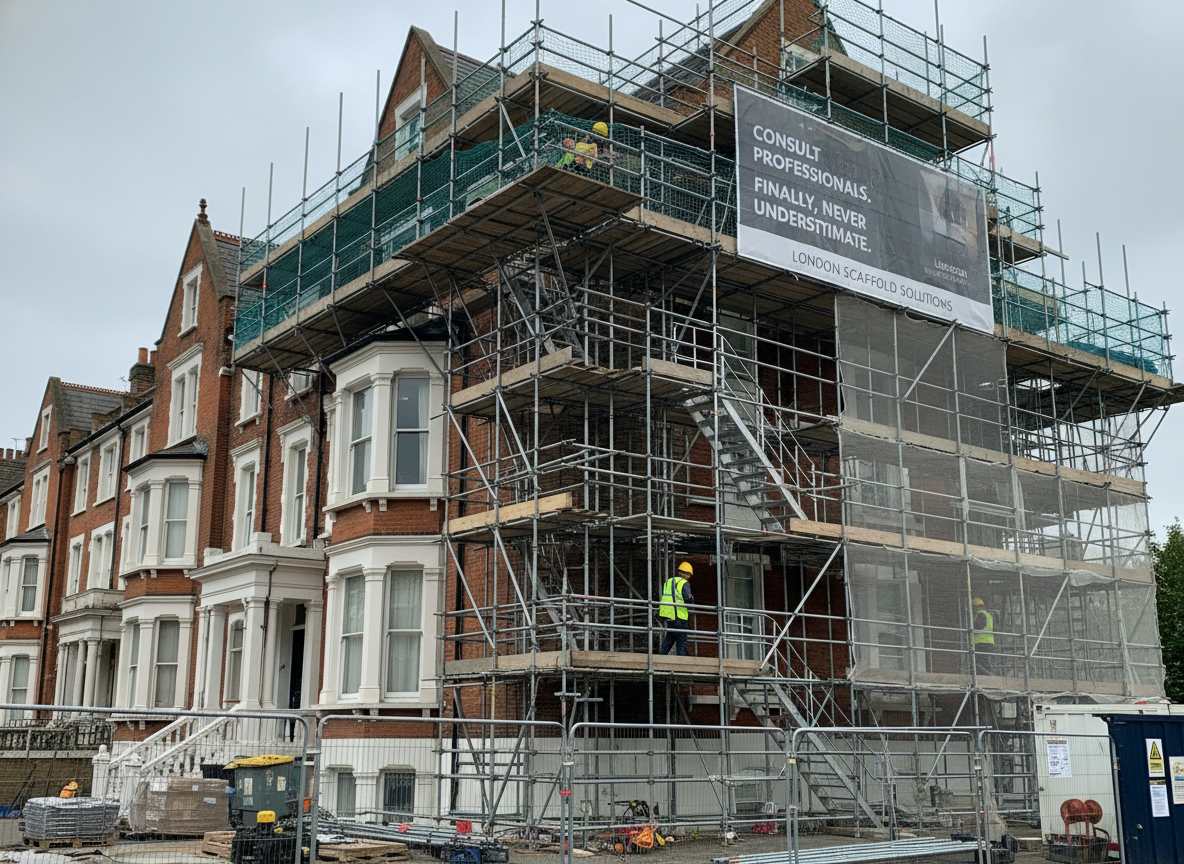
Choosing the correct scaffolding type is crucial for the success of any construction project. Not only does it ensure the safety of all workers involved, but it also optimizes project efficiency and reduces costs. This step-by-step guide will walk you through the process, helping you make an informed decision tailored to your project’s unique needs.
Step 1: Assess Your Project Requirements
Begin by thoroughly evaluating the specifics of your project. Are you working on a domestic renovation, a commercial build, or a high-rise structure? Each project type has distinct scaffolding needs. For instance, tube and fitting scaffolding is ideal for projects with irregular architectural elements, whereas system scaffolding like kwikstage is suitable for large and repetitive structures.
Consider the project duration and timeline. If speed is of the essence, opting for system scaffolding might be advantageous due to its quick assembly and disassembly. However, if your project involves complex shapes, the flexibility of tube and fitting scaffolding could prove indispensable.
Step 2: Identify Safety and Compliance Needs
Safety cannot be overstated in the construction industry. Ensure that the scaffolding type you choose complies with UK safety standards and regulations. For example, mobile towers, which are ideal for indoor projects, must be equipped with proper stabilisers and brakes to prevent accidental movement.
Evaluate the load capacity requirements of your project. High-load capacities are crucial for larger structures like stadiums, where system scaffolding is often preferred. Regular safety checks and maintenance should also be planned to ensure ongoing compliance and safety on site.
Step 3: Consider the Location and Environment
The physical location of your project can significantly influence your scaffolding choice. If you're working on a high-rise building, suspended scaffolding might be your best bet due to its minimal ground space usage and ease of vertical movement.
Weather conditions should also be taken into account. For example, in areas prone to strong winds, ensuring that the scaffolding is adequately secured and stable is paramount. System scaffolding with its robust structure can offer enhanced stability in such conditions.
Step 4: Evaluate Cost and Budget Constraints
Cost is always a deciding factor. System scaffolding may have a higher upfront cost but can lead to savings on labour due to its faster installation. Conversely, tube and fitting scaffolding might be more labour-intensive but provides unbeatable customisation for complex projects.
Prepare a detailed budget that includes potential costs for scaffolding hire, installation, and any necessary training. Our scaffolding hire services can provide competitive rates and expert guidance to help you stay within budget while meeting all project requirements.
Step 5: Consult with Professionals
Finally, never underestimate the value of professional advice. Consulting with scaffolding experts can provide insights that you might not have considered. They can offer recommendations based on experience and help you navigate the myriad of options available.
Engage with a trusted scaffolding provider who can assess your specific needs and suggest the most suitable scaffolding type. For tailored advice and superior service, explore our domestic scaffolding services to find the perfect scaffolding solution for your project.
By following these steps, you'll be well-equipped to select the most appropriate scaffolding type for your construction project, ensuring safety, efficiency, and cost-effectiveness. Remember, the right scaffolding not only supports your workers but also upholds the integrity and progress of your entire project.
Expert Tips for Choosing and Hiring
Choosing the right scaffolding provider is as crucial as selecting the correct scaffolding type. A reliable provider ensures quality equipment, adherence to safety standards, and smooth project execution. Here are expert tips to guide you through choosing and hiring the best scaffolding services for your construction project.
Assessing Your Project's Needs
Before you begin your search for a scaffolding provider, it's essential to have a clear understanding of your project's specific needs. This will help you communicate effectively with potential providers and ensure you receive accurate quotes and recommendations.
- Define the scope and scale of your project, including the type of scaffolding required: system, tube and fitting, mobile towers, or suspended.
- Identify any special requirements, such as high load capacities or customised configurations for irregular structures.
- Consider the project timeline and whether rapid assembly and disassembly are priorities.
- Ensure compliance with all relevant safety standards and regulations.
Evaluating Providers
Once you’ve identified your needs, the next step is evaluating potential scaffolding providers. This involves assessing their experience, reliability, and suitability for your project.
- Research providers with a proven track record in the scaffolding types you require.
- Check for industry accreditations and certifications to ensure compliance with UK safety standards.
- Read client reviews and testimonials to gauge customer satisfaction and service quality.
- Request detailed quotes and compare them using a tool like our scaffolding quote calculator.
- Verify insurance coverage to protect against potential liabilities.
Questions to Ask
Engaging with potential scaffolding providers requires due diligence. Asking the right questions can reveal critical insights into their operations and reliability.
- What is your experience with projects similar to mine? This helps assess their expertise and ability to handle your specific requirements.
- Can you provide references from past clients? Validates their track record and reliability.
- What safety measures do you implement? Ensures they prioritise safety and comply with necessary regulations.
- What is your policy on maintenance and inspections? Regular maintenance is crucial for safety and compliance.
- What is the estimated timeline for installation and dismantling? Ensures it aligns with your project schedule.
Be wary of red flags such as vague answers, reluctance to provide references, or unusually low quotes that seem too good to be true. A reputable provider will be transparent, communicative, and eager to ensure your project's success.
By following these expert tips, you can confidently choose and hire a scaffolding provider that meets your project's unique needs. For professional advice and reliable scaffolding hire, explore our scaffolding hire services and ensure your project's safety and efficiency from start to finish.
Comprehensive FAQ
What are the different types of scaffolding available in the UK?
The UK construction market predominantly utilises four main types of scaffolding: system scaffolding, tube and fitting scaffolding, mobile towers, and suspended scaffolding. System scaffolding, including cuplock and kwikstage, offers quick assembly and high load capacity, making it ideal for large projects. Tube and fitting scaffolding is highly customisable, perfect for complex architectural designs. Mobile towers provide flexibility and mobility for projects requiring frequent movement. Suspended scaffolding is used for high-rise work, offering easy vertical access with minimal ground space usage.
How much does scaffolding hire typically cost?
Scaffolding hire costs in the UK can vary significantly depending on factors such as the type of scaffolding, project duration, and location. Generally, system scaffolding may incur higher upfront costs due to its efficiency and load capacity, while tube and fitting scaffolding might be more cost-effective for bespoke projects. For example, hiring scaffolding for a small domestic project might start from £15 per square metre, whereas larger commercial projects could see costs exceeding £100 per square metre. Always request detailed quotes to ensure you’re getting the best value.
What safety regulations should I be aware of when using scaffolding in the UK?
In the UK, scaffolding safety is governed by regulations such as the Work at Height Regulations 2005. These require that all scaffolding structures are properly designed, installed, and maintained by competent individuals. Regular inspections should be conducted before use and after adverse weather conditions. Additionally, scaffolding must be equipped with safety features like guardrails, toe boards, and secure platforms. Ensuring compliance with these regulations is crucial for preventing accidents and ensuring worker safety on site.
How long does it take to install and dismantle scaffolding?
The installation and dismantling time for scaffolding depends on the type and complexity of the project. System scaffolding can be erected and dismantled quickly, often within a day for small to medium projects. In contrast, tube and fitting scaffolding, while offering greater flexibility, might take longer due to its bespoke nature. Mobile towers, being lightweight and portable, are the fastest to set up and remove, usually within a few hours. Always plan your project timeline with these factors in mind to avoid delays.
What is the process for hiring scaffolding?
The scaffolding hire process typically involves assessing your project needs, obtaining quotes from reputable providers, and ensuring compliance with safety standards. Start by defining your project scope and selecting the appropriate scaffolding type. Request quotes and compare them for cost-effectiveness and service quality. Confirm the provider’s experience and check references. Once selected, the provider will deliver, install, and eventually dismantle the scaffolding. For expert guidance, consider exploring our scaffolding hire services.
How is scaffolding maintained and inspected?
Regular maintenance and inspection of scaffolding are crucial to ensuring safety and compliance. In the UK, scaffolding should be inspected by a competent person before its first use, after any modifications, and following adverse weather conditions. Inspections typically involve checking for stability, secure fittings, and any signs of wear or damage. Maintenance includes cleaning, repairing any damaged components, and ensuring all safety features like guardrails and toe boards are intact. A well-maintained scaffold not only ensures safety but also enhances operational efficiency.
Are there any common misconceptions about scaffolding?
One common misconception is that all scaffolding types are interchangeable. In reality, each type has specific applications and benefits, such as system scaffolding’s quick assembly or tube and fitting’s adaptability. Another misconception is that scaffolding is inherently unsafe; however, when properly installed and maintained by qualified professionals, it is a safe and reliable structure. Additionally, many assume that hiring scaffolding is overly expensive, but by choosing the right type and provider, costs can be effectively managed without compromising on safety.
What tips can you give for hiring scaffolding?
When hiring scaffolding, start by fully understanding your project’s requirements, including type, duration, and safety needs. Research and choose a provider with a proven track record and necessary certifications. Always request detailed quotes to compare costs and services. Ensure the provider offers comprehensive insurance coverage and adheres to UK safety regulations. Don’t hesitate to ask potential providers about their experience with similar projects and their safety protocols. For reliable and expert scaffolding hire, explore our domestic scaffolding services.
Next Steps & CTA
By now, you've gained a comprehensive understanding of the various scaffolding types available in the UK and how each can benefit different construction projects. Whether you're considering system scaffolding for its rapid assembly or tube and fitting scaffolding for its customisation, making an informed decision is key to ensuring site safety and project efficiency.
Feeling confident and ready to take the next step? If you're planning a construction project, it's crucial to choose the right scaffolding solution tailored to your specific needs. Our expert team is here to assist you every step of the way. For a personalised recommendation and competitive pricing, get your scaffolding quote today.
If you have any questions or need further advice, don't hesitate to contact our team. We're committed to helping you achieve a safe and successful construction project with the perfect scaffolding setup. Together, let's ensure your project not only meets but exceeds safety standards and efficiency goals.
With the right scaffolding, your construction project will be well-supported, safe, and set up for success. Explore our scaffolding hire services and make your next project a triumph. Let's build the future together!
Explore More Arch Design Options
Related Articles
Comprehensive guide to access scaffolding in the UK. Learn about costs, types, installation, and find the best scaffolding solutions for your project.
Comprehensive guide to commercial scaffolding in the UK. Learn about costs, types, installation, and find the best scaffolding solutions for your project.
Comprehensive guide to industrial scaffolding in the UK. Learn about costs, types, installation, and find the best scaffolding solutions for your project.
Ready to Get Started?
Scaffolding Hire Surrey Team
CISRS Lead InspectorAdvanced Scaffolder, 15+ Years Experience
David Miller is a recognized expert in scaffolding safety and construction logistics across the UK. With a career spanning over 15 years, he specializes in TG20:21 compliance and complex industrial access solutions. His insights help ensure that every project on Scaffolding Hire London meets the highest possible safety and efficiency standards.
Ready to Start Your Scaffolding Project?
Whether you're planning a home extension, commercial development, or industrial project, our professional scaffolding solutions can help you complete your project safely and efficiently.