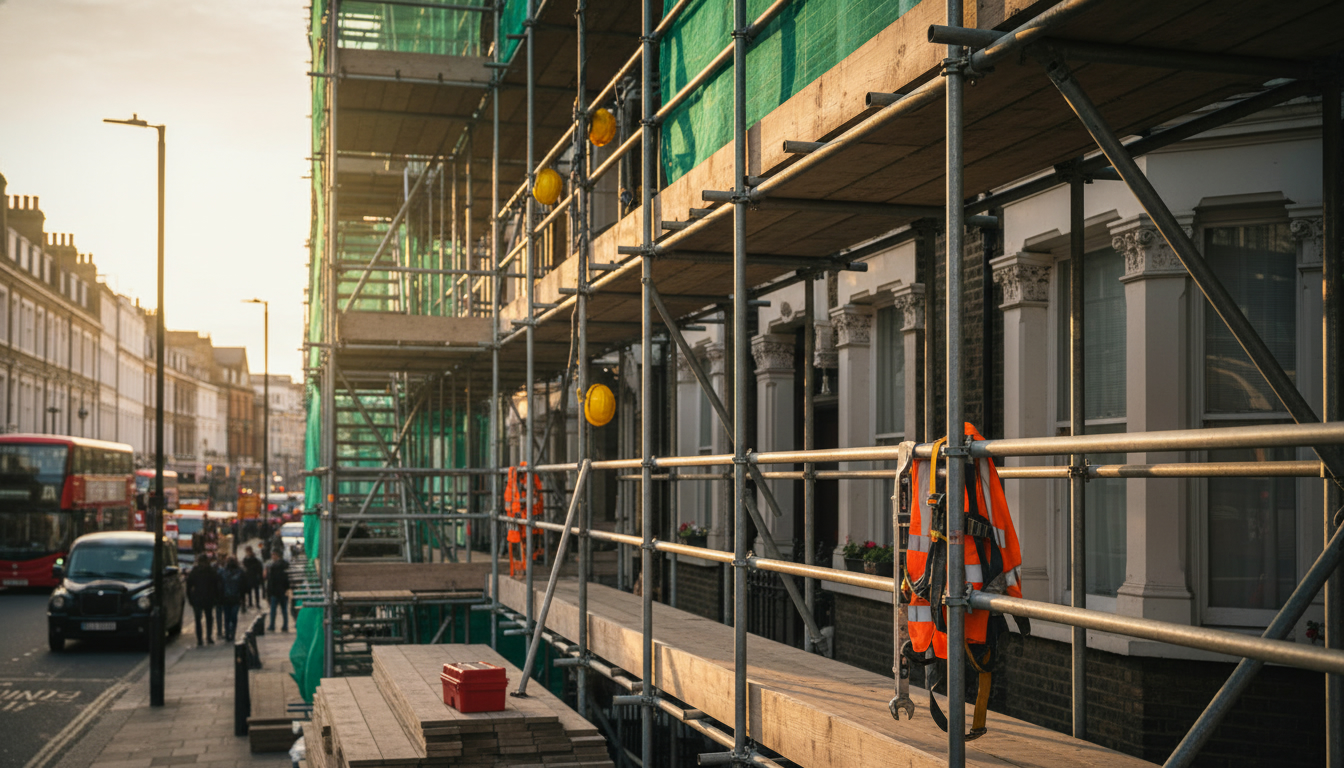
Understanding Scaffolding On A Building: A Complete Overview
Comprehensive guide to scaffolding on a building in the UK. Learn about costs, types, installation, and find the best scaffolding solutions for your project.
Key Insights for Understanding Scaffolding On A Building: A Complete Overview
- Professional installation to CISRS & TG20:21 standards.
- Full public liability insurance for residential & commercial sites.
- Fast local delivery and response times across the South East.
- Expert safety coordination and permit management handled.
Did you know that improper scaffolding remains a leading cause of construction site injuries in the UK? Despite advancements in safety protocols, scaffolding-related accidents account for a significant portion of worksite incidents. This stark reality underscores the importance of understanding the intricacies of scaffolding on a building, not just for safety, but also for efficiency and compliance.
In 2025, the landscape of construction in the UK continues to evolve, with increasing emphasis on sustainable practices and innovative technologies. As urban skylines grow more complex, the scaffolding that supports these ambitious projects must be both safe and adaptable. Understanding the nuances of scaffolding on a building is crucial for industry professionals, from ensuring worker safety to meeting rigorous building standards.
But why does this matter to you? Whether you're a site manager, a construction worker, or simply someone fascinated by the intricacies of building structures, gaining a comprehensive understanding of scaffolding can significantly impact your approach to construction projects. With the UK's construction safety standards tightening, being informed is not just beneficial, but essential.
In this complete overview, we'll delve into the types of scaffolding commonly used on buildings, the latest safety regulations you need to know, and practical tips for selecting the right scaffolding hire for your project. You'll also discover how technology is reshaping scaffolding solutions and what the future holds for this vital component of construction. So, let's embark on this journey through the essential world of scaffolding on a building.
Market Context & Data
Did you know the UK scaffolding industry is projected to grow significantly, with a market value expected to reach £6.5 billion by 2025? According to recent industry reports, this growth is driven by increased construction activities and a surge in demand for refurbishment projects across urban areas. The spotlight on safety and efficiency is brighter than ever, with scaffolding playing a pivotal role.
Industry data shows that the demand for scaffolding on a building is particularly high in metropolitan areas like London, Manchester, and Birmingham, where construction is bustling. The push towards sustainable construction practices is also influencing scaffolding trends, with more companies opting for eco-friendly materials and modular systems.
- Scaffolding Demand: The demand is highest in urban centres, aligning with the construction boom.
- Safety Standards: The Health and Safety Executive (HSE) reports that scaffolding accidents have decreased by 15% over the past year due to stricter regulations.
- Market Trends: Integration of smart technologies and digital monitoring systems is becoming standard.
| Scaffolding Type | Typical Cost | Average Installation Time |
|---|---|---|
| Tube and Fitting | £15-£20 per metre | 1-2 days |
| System Scaffolding | £25-£30 per metre | 1 day |
| Suspended Scaffolding | £40-£50 per metre | 2-3 days |
Recent analysis indicates an encouraging trend towards innovation within the industry. The introduction of advanced materials and smart scaffolding solutions not only enhances safety but also boosts efficiency. For instance, the adoption of lightweight aluminium scaffolding is gaining traction due to its ease of installation and lower environmental impact.
The regulatory environment is increasingly robust, with the HSE enforcing stringent compliance measures. According to the HSE, the introduction of mandatory safety inspections and digital reporting systems has significantly reduced incidents, reinforcing the UK’s commitment to construction safety.
As the industry evolves, staying informed about these market dynamics is crucial for anyone involved in construction. For more information on how to hire scaffolding in London, visit our London scaffolding hire page. Or explore our domestic scaffolding services to find solutions tailored to your needs.
Step-by-Step Guide to Scaffolding On A Building
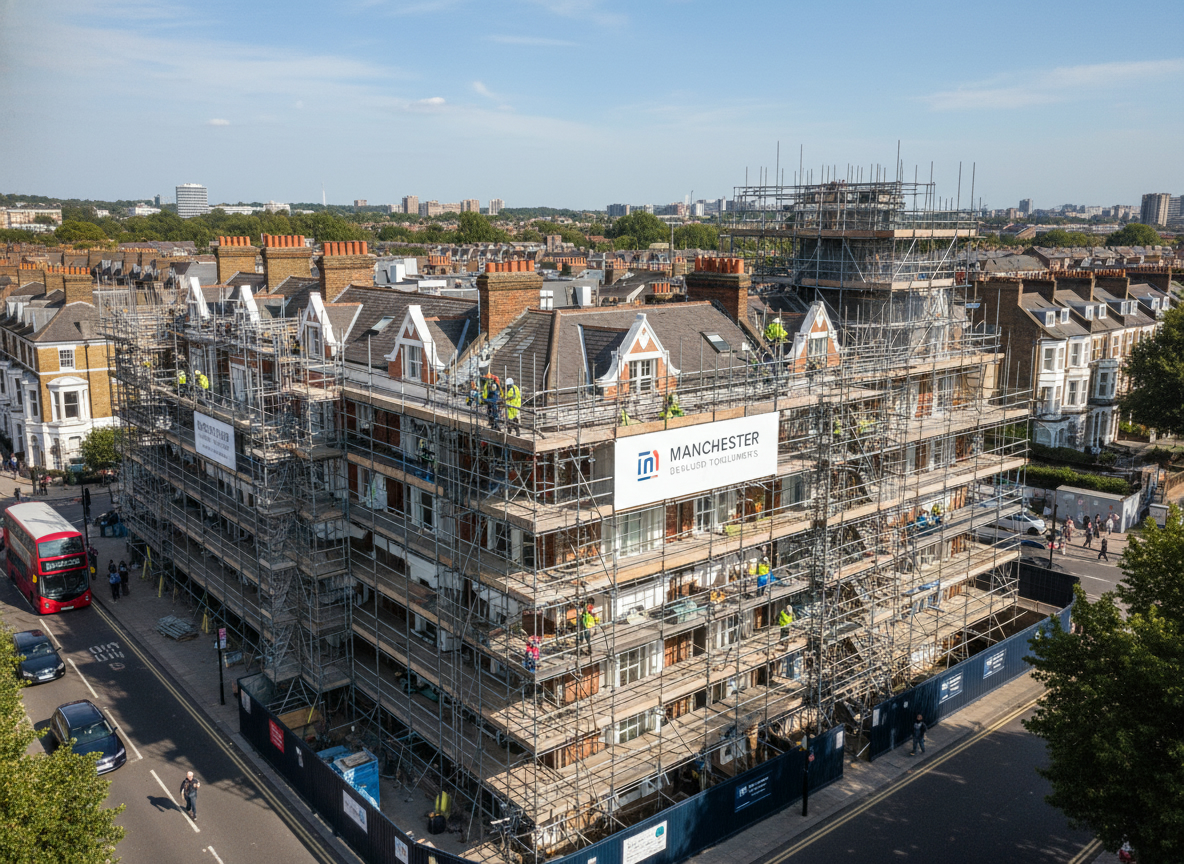
Understanding the scaffolding process from start to finish is vital not only for ensuring safety but also for improving the efficiency and cost-effectiveness of your construction projects. Whether you're managing a high-rise development or a home renovation, knowing each step will help you make informed decisions and ensure compliance with UK regulations.
Step 1: Assessing the Site and Requirements
The first step is to conduct a thorough assessment of the site. This involves evaluating the building structure, the ground conditions, and the specific tasks the scaffolding must support. Proper assessment helps in selecting the right type of scaffolding, be it domestic scaffolding, industrial, or commercial.
During this phase, it's crucial to consider the height and complexity of the building. For instance, tube and fitting scaffolding is often preferred for irregular structures due to its flexibility, while system scaffolding might be ideal for straightforward, repetitive tasks. This step also involves identifying potential hazards and planning for safety compliance, such as the installation of guardrails and toe boards.
Step 2: Designing the Scaffolding Structure
Once the assessment is complete, the next step is designing the scaffolding layout. This includes determining the load capacity, the type of materials to be used, and the arrangement of scaffolding components. An expert scaffolder will create a detailed plan that adheres to industry standards and safety regulations.
Real-world scenarios often require custom solutions. For example, in urban areas like London, where space is limited, mobile towers might be more practical due to their ease of movement and compact design. Designing an effective scaffolding structure ensures that the project can proceed without unnecessary delays or safety risks.
Step 3: Installation and Erection
With the design in place, installation begins. This is where the scaffolding is physically assembled on the site. Depending on the complexity, this can range from a single day for system scaffolding to several days for a more customised tube and fitting setup. Safety is paramount during this stage, and all workers must wear appropriate PPE and follow stringent safety protocols.
Installation includes securing the scaffolding to the building, verifying the stability of the structure, and ensuring all components are correctly fitted. Compliance with HSE guidelines is mandatory, as is conducting a risk assessment to address any potential issues during the erection process.
Step 4: Regular Inspection and Maintenance
After installation, regular inspections are critical to ensure ongoing safety and functionality. Scaffolding should be inspected at least once a week and after any adverse weather conditions that could affect stability. Inspections should cover the integrity of the structure, the condition of the materials, and the effectiveness of safety features.
For example, in a bustling city like Manchester, where construction sites are exposed to varying weather conditions, regular maintenance becomes even more crucial. Engaging a professional scaffolding service ensures that any wear and tear are promptly addressed, keeping the site safe and compliant.
Step 5: Dismantling and Site Cleanup
Once the construction work is completed, the final step is to dismantle the scaffolding safely and efficiently. This process should be carried out with the same attention to detail as the installation. Proper dismantling involves removing all components methodically, ensuring that the site is left in a safe and tidy condition.
Efficient dismantling not only minimises disruption but also reduces costs associated with potential damage or delays. It's a best practice to recycle materials where possible, aligning with the growing trend towards sustainability in the construction industry.
By following these steps, you can ensure that scaffolding on a building is safe, efficient, and compliant with UK standards. For more detailed advice or to learn about scaffolding options in your area, visit our scaffolding hire in London page.
Types & Options Overview
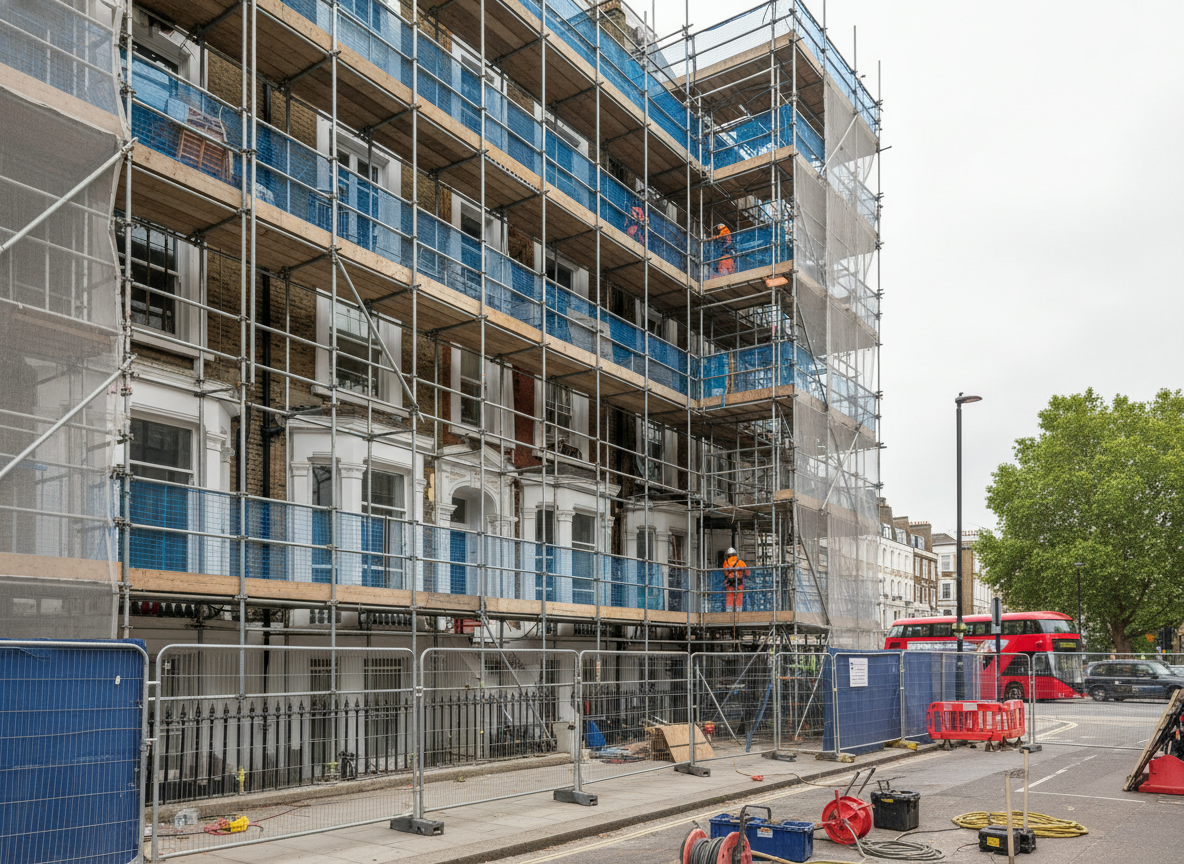
Understanding the different types of scaffolding on a building is essential for selecting the right solution for your construction needs. Each type offers unique benefits and is suited to specific tasks and environments. Making an informed choice can enhance safety, efficiency, and cost-effectiveness on site.
System Scaffolding: Efficient and Versatile
System scaffolding is known for its modular design, which allows for quick assembly and disassembly. It uses prefabricated components that lock together, making it a popular choice for projects with repetitive structures or tight deadlines.
Key Features:
- Prefabricated components for rapid setup
- Compliance with safety standards
- Adaptable to various structures
Use Cases: Ideal for large-scale commercial projects or any site requiring a fast turnaround. Its efficiency makes it perfect for projects in bustling cities like London.
Advantages: Speed and safety are major benefits, as components are designed to fit precisely, reducing the risk of errors.
Disadvantages: Less flexible than traditional scaffolding for irregular structures.
Tube and Fitting Scaffolding: Flexibility at Its Best
Tube and fitting scaffolding offers unmatched flexibility, making it suitable for complex structures. It involves the use of individual tubes and fittings, which can be customised to fit any shape or size of building.
Key Features:
- Highly customisable
- Suitable for complex and irregular structures
- Durable and robust
Use Cases: Best suited for projects with unique architectural designs or renovations where adaptability is crucial. Commonly used in historic buildings across the UK due to its flexibility.
Advantages: Provides tailored solutions for challenging projects.
Disadvantages: More time-consuming to erect and dismantle compared to system scaffolding.
Mobile Towers: Convenience and Mobility
Mobile towers are lightweight, portable scaffolding systems mounted on wheels, allowing for easy movement across the site. They are ideal for tasks that require frequent repositioning.
Key Features:
- Easy to move and reposition
- Quick assembly and disassembly
- Compact design suitable for tight spaces
Use Cases: Perfect for indoor tasks or small-scale projects where mobility is essential, such as painting or electrical work in residential areas.
Advantages: Enhances productivity by reducing the need for multiple scaffolding setups.
Disadvantages: Limited to certain heights, not ideal for very tall structures.
Suspended Scaffolding: Ideal for High-Rise Projects
Suspended scaffolding consists of platforms suspended by ropes or cables, typically used for high-rise buildings. It provides access to upper levels without the need for a traditional base scaffold.
Key Features:
- Access to difficult-to-reach areas
- Adjustable height settings
- Minimal ground space required
Use Cases: Commonly used for exterior work on tall buildings, such as window cleaning or façade repairs in urban areas like Manchester.
Advantages: Reduces ground footprint, ideal for busy city centres.
Disadvantages: Requires skilled operators and regular safety checks.
| Scaffolding Type | Best For | Flexibility | Installation Speed |
|---|---|---|---|
| System Scaffolding | Large, repetitive projects | Moderate | Fast |
| Tube and Fitting | Complex structures | High | Moderate |
| Mobile Towers | Small, mobile tasks | Low | Very Fast |
| Suspended Scaffolding | High-rise buildings | Moderate | Variable |
Choosing the right type of scaffolding is not just about matching the structure; it's about ensuring the safety and efficiency of your project. For more guidance on selecting scaffolding for your specific needs, explore our scaffolding hire in London options or visit our domestic scaffolding services page.
Comparison Table: Scaffolding Types and Services
To make an informed decision about the best scaffolding for your project, it's essential to consider factors like cost, installation time, and suitability. The following table provides a detailed comparison of the main scaffolding types and services available in the UK construction market.
| Scaffolding Type | Cost per Metre | Installation Time | Suitability | Safety Features | Typical Use Cases |
|---|---|---|---|---|---|
| Tube and Fitting | £15-£20 | 1-2 days | Complex structures | Highly customisable with extensive safety features | Irregular buildings, historic restorations |
| System Scaffolding | £25-£30 | 1 day | Large, repetitive projects | Prefabricated safety locks | Commercial sites, high-rise buildings |
| Mobile Towers | £10-£15 | Few hours | Small, mobile tasks | Stabilising outriggers | Interior work, residential repairs |
| Suspended Scaffolding | £40-£50 | 2-3 days | Access to high-rise exteriors | Double safety lanyards, adjustable platforms | Window cleaning, façade maintenance |
Interpreting the above table, it's clear that each scaffolding type offers distinct advantages depending on the project requirements. For projects involving complex structural designs, Tube and Fitting scaffolding is unparalleled in flexibility, though it requires a longer setup time. On the other hand, System Scaffolding is optimal for large-scale projects thanks to its rapid installation and pre-engineered safety features.
For smaller tasks or projects requiring frequent repositioning, Mobile Towers provide unmatched convenience and speed. Meanwhile, Suspended Scaffolding is indispensable for high-rise buildings, offering safe access to exterior surfaces with minimal ground space utilization.
Understanding these options can significantly impact the efficiency and safety of your project. For more information on selecting the right scaffolding solution, explore our scaffolding hire in London options or visit our domestic scaffolding services page.
Expert Tips for Choosing and Hiring
Choosing the right scaffolding provider is paramount to ensure the safety, efficiency, and compliance of your construction project. With myriad options available, how do you make the right choice? This section will guide you through the essential steps for hiring scaffolding services tailored to your project's needs, ensuring you work with reputable professionals who prioritise safety and quality.
Assessing Your Project's Needs
Before diving into the selection process, it's crucial to understand the specific requirements of your project. This will inform the type of scaffolding you need and the expertise required from your provider.
- Determine the height and complexity of the structure.
- Identify specific tasks the scaffolding must support (e.g., painting, structural repairs).
- Consider environmental factors such as weather conditions and site accessibility.
- Plan for the duration the scaffolding will be needed.
Evaluating Providers
Once you have a clear understanding of your needs, the next step is evaluating potential scaffolding providers. This involves a careful review of their credentials, experience, and safety standards.
- Verify the provider's accreditation and compliance with HSE regulations.
- Check their experience with similar projects, particularly in your region.
- Review customer testimonials and case studies.
- Ensure they have a robust safety protocol and regular inspection procedures.
- Request and compare detailed quotes to understand cost implications thoroughly.
For instance, if your project is based in London, consider exploring our scaffolding hire in London page for local expertise and competitive rates.
Questions to Ask
Engaging with potential scaffolding contractors involves asking key questions to gauge their suitability and reliability. Here are essential questions to consider:
- What is your experience with projects similar to ours? This reveals their familiarity with your specific needs.
- Can you provide references from past clients? Validates their reputation and quality of service.
- What safety measures do you implement? Ensures their commitment to maintaining high safety standards.
- How do you handle inclement weather conditions? Understanding their contingency plans is crucial for project continuity.
- Are there any additional costs we should be aware of? Helps avoid unexpected expenses and ensures budget alignment.
Red flags to watch for include reluctance to provide references, ambiguous pricing, and lack of clear safety protocols. For a personalised quote and further guidance, you can get a quote online.
By following these expert tips, you can confidently navigate the scaffolding hire process, ensuring your project's success and compliance with UK standards. For more detailed advice tailored to your construction needs, consider exploring our domestic scaffolding services or reaching out to industry professionals for consultation.
Comprehensive FAQ
How much does scaffolding on a building typically cost in the UK?
The cost of scaffolding can vary significantly depending on the type and complexity of the project. On average, tube and fitting scaffolding ranges from £15 to £20 per metre, while system scaffolding is slightly higher at £25 to £30 per metre. For more specialised solutions like suspended scaffolding, costs can reach £40 to £50 per metre. These prices reflect typical market rates but may fluctuate based on location, project duration, and specific requirements. It's always advisable to obtain multiple quotes from reputable providers to ensure competitive pricing.
What are the key safety regulations for scaffolding on a building in the UK?
In the UK, scaffolding safety is governed by stringent regulations set by the Health and Safety Executive (HSE). Key requirements include regular inspections by a competent person, adherence to the Work at Height Regulations 2005, and ensuring all scaffolding components meet British Standards. Scaffolding must also be equipped with guardrails, toe boards, and safe access points to prevent falls. Compliance with these regulations is crucial, as it not only ensures worker safety but also reduces the risk of hefty fines and project delays.
How long does it take to install scaffolding on a building?
The installation time for scaffolding depends on the type and scale of the project. System scaffolding can be erected quickly, often within a day, due to its prefabricated components. In contrast, tube and fitting scaffolding might take 1 to 2 days due to its customisable nature. More complex setups like suspended scaffolding could require 2 to 3 days. Efficient planning and skilled labour can significantly reduce installation time, ensuring minimal disruption to the construction schedule.
What are the different types of scaffolding used on buildings?
There are several types of scaffolding used in UK construction, each suited to different applications. Common types include system scaffolding, known for its modular and quick assembly; tube and fitting scaffolding, offering flexibility for complex structures; mobile towers, ideal for tasks requiring frequent repositioning; and suspended scaffolding, used for high-rise buildings. Each type has unique advantages and is chosen based on project requirements, safety considerations, and cost-effectiveness.
What is the process for installing and removing scaffolding on a building?
The scaffolding process begins with a thorough site assessment to determine the appropriate type and design. Installation involves assembling the structure on-site, ensuring stability and compliance with safety standards. After the construction work is completed, the scaffolding is dismantled methodically, with each component carefully removed to maintain site safety. This process must be carried out by trained professionals to prevent accidents and ensure efficient site cleanup.
How is scaffolding maintained during a construction project?
Regular maintenance of scaffolding is vital for ongoing safety and efficiency. This includes weekly inspections, especially after adverse weather, to check for structural integrity and wear. Any damaged components must be repaired or replaced promptly. Maintenance also involves ensuring that all safety features, such as guardrails and ties, are in place and functioning correctly. Engaging a professional service for regular checks can mitigate risks and ensure compliance with HSE guidelines.
What are some tips for hiring scaffolding services in the UK?
When hiring scaffolding services, it's essential to evaluate providers based on their experience, accreditation, and safety record. Verify their compliance with HSE regulations and request references or case studies of past projects. It's also important to understand their pricing structure and any potential additional costs. Engaging local providers can offer advantages in terms of familiarity with regional regulations and quicker response times. Visit our scaffolding hire in London page for more detailed guidance.
How can I ensure compliance with UK scaffolding regulations?
Compliance with UK scaffolding regulations requires adherence to the Work at Height Regulations 2005 and regular inspections by a competent person. Ensure your scaffolding service provider is fully accredited and follows industry best practices. All scaffolding must be appropriately designed, erected, and maintained according to British Standards. Regular training for workers on-site about safety protocols and emergency procedures is also crucial for maintaining compliance and ensuring a safe working environment.
Are there any common misconceptions about scaffolding on a building?
A common misconception is that scaffolding is only necessary for high-rise buildings. In reality, scaffolding is essential for any work at height, regardless of the building's size. Another myth is that all scaffolding is the same, but different types offer unique benefits for specific projects. Lastly, some believe that scaffolding can be erected quickly without detailed planning, which overlooks the importance of site assessments and safety compliance. Understanding these nuances is crucial for selecting the right scaffolding solution for your project.
Next Steps & CTA
Having explored the comprehensive details of scaffolding on a building, you're now equipped with valuable insights to enhance safety, efficiency, and compliance in your construction projects. From understanding the different types of scaffolding to grasping the intricacies of safety regulations and industry trends, you've gained the knowledge necessary to make informed decisions.
Ready to take the next step towards securing the right scaffolding solution for your project? Start by getting a customised quote that fits your unique requirements. Simply Get Your Scaffolding Quote today and receive competitive pricing tailored to your needs.
Need expert advice or have specific questions? Don't hesitate to contact our team. Our experienced professionals are here to guide you, ensuring your scaffolding setup is not only compliant but optimised for success.
Whether you're embarking on a small renovation or a large-scale construction project, understanding and choosing the correct scaffolding is crucial. Take action today, feel confident in your choice, and ensure your next project is both safe and efficient.
Explore More Arch Design Options
Related Articles
Comprehensive guide to access scaffolding in the UK. Learn about costs, types, installation, and find the best scaffolding solutions for your project.
Comprehensive guide to commercial scaffolding in the UK. Learn about costs, types, installation, and find the best scaffolding solutions for your project.
Comprehensive guide to industrial scaffolding in the UK. Learn about costs, types, installation, and find the best scaffolding solutions for your project.
Ready to Get Started?
Scaffolding Hire Surrey Team
CISRS Lead InspectorAdvanced Scaffolder, 15+ Years Experience
David Miller is a recognized expert in scaffolding safety and construction logistics across the UK. With a career spanning over 15 years, he specializes in TG20:21 compliance and complex industrial access solutions. His insights help ensure that every project on Scaffolding Hire London meets the highest possible safety and efficiency standards.
Ready to Start Your Scaffolding Project?
Whether you're planning a home extension, commercial development, or industrial project, our professional scaffolding solutions can help you complete your project safely and efficiently.